[Image placeholder — hero] Replace with
how-big-is-the-universe-hero.webpwhen ready.Tall ladder (Moon → Sun → Nearest star → Milky Way → Everything) with chibi Pawfessor Hu on a football-sized Earth at the base, looking up.
TL;DR
- Your brain can’t picture it. Nobody’s can. The trick is to climb one rung at a time and only compare neighbours.
- Light is the ruler. The Moon is 1.3 light-seconds away, the Sun 8 minutes, the nearest star 4 years, the far edge 46 billion years.
- Ten rungs take you from your own height to the observable universe, and each is roughly a thousand to a million times bigger than the last.
- The edge is further than the age. The universe is 13.8 billion years old but 93 billion light-years across. That’s not a typo; it’s expansion.
| Rung | Size or distance | Light takes |
|---|---|---|
| You | 1.7 m | 6 billionths of a second |
| Earth (diameter) | 12,742 km | 0.04 seconds |
| Moon | 384,400 km | 1.3 seconds |
| Sun | 150 million km (1 AU) | 8 min 20 s |
| Voyager 1 | ~170 AU | ~1 day |
| Nearest star | 4.24 light-years | 4.2 years |
| Milky Way (diameter) | ~100,000 light-years | 100,000 years |
| Andromeda | 2.5 million light-years | 2.5 million years |
| Laniakea (diameter) | ~520 million light-years | 520 million years |
| Observable universe (diameter) | ~93 billion light-years | 13.8 billion years¹ |
¹ The oldest light we can see left 13.8 billion years ago. Where it came from is now 46 billion light-years away. More on that at the end.
The ladder
Scroll through it first. Every frame is to scale: the thing you just left shrinks to a ring, the numbers keep counting, and the dark stretches in between are real.
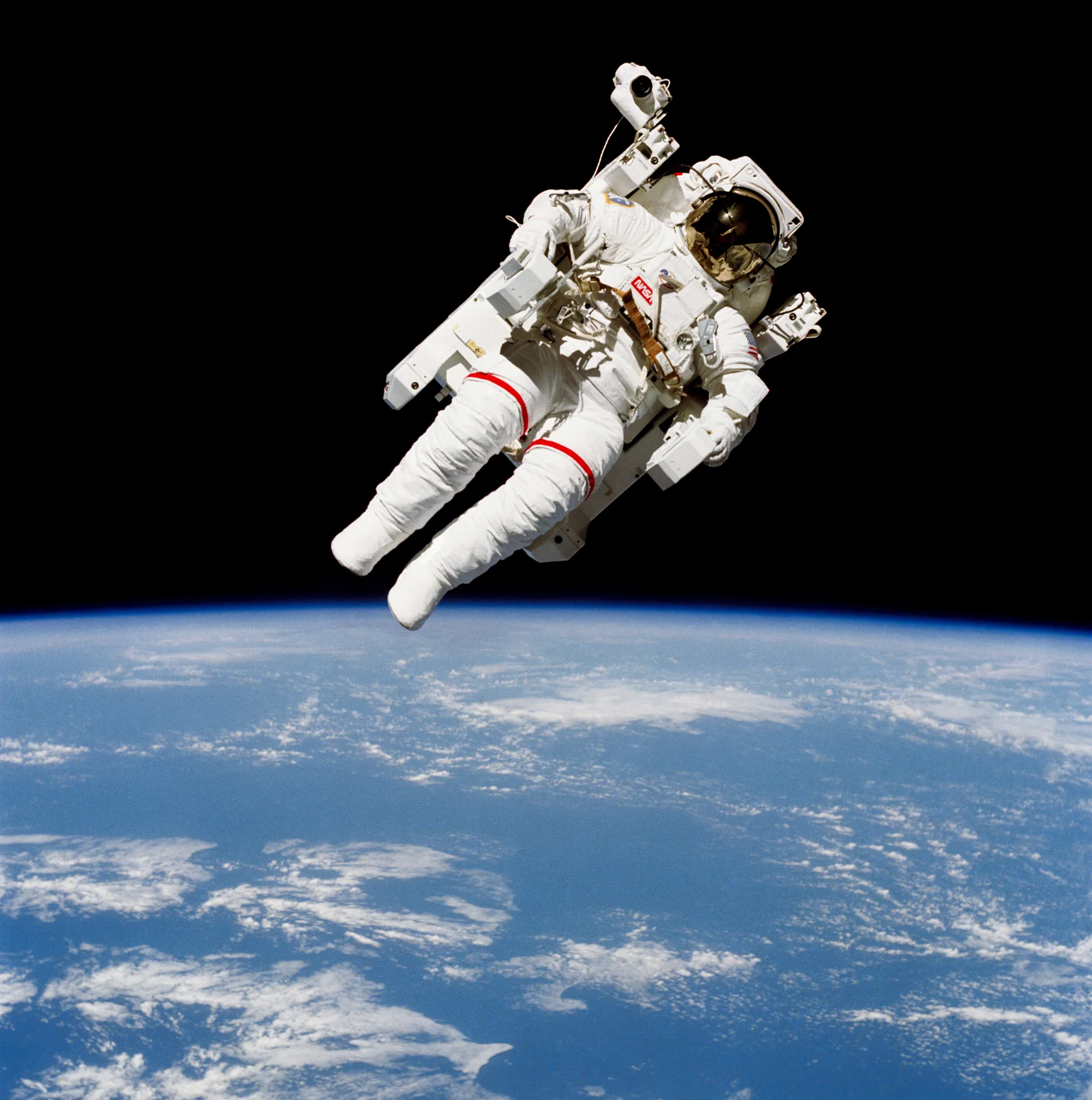
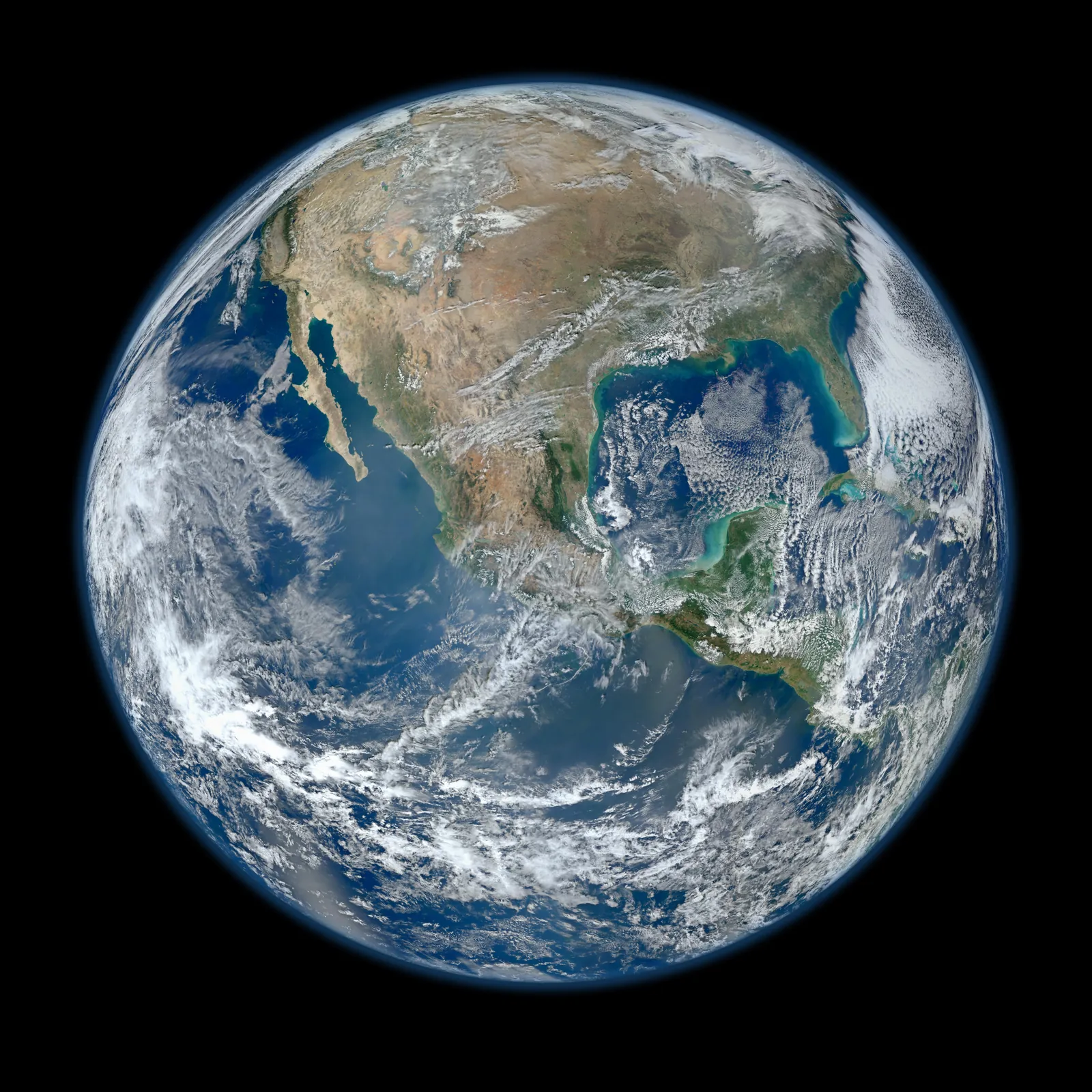

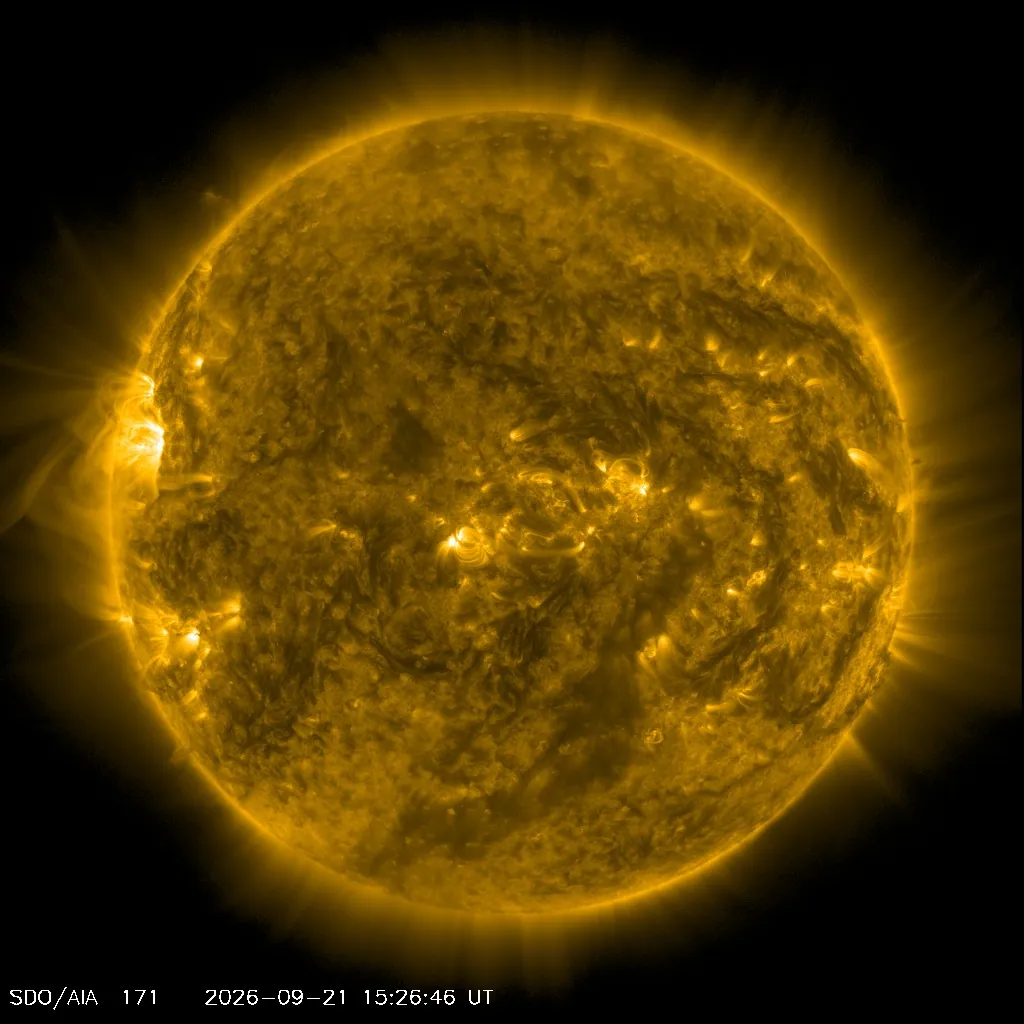
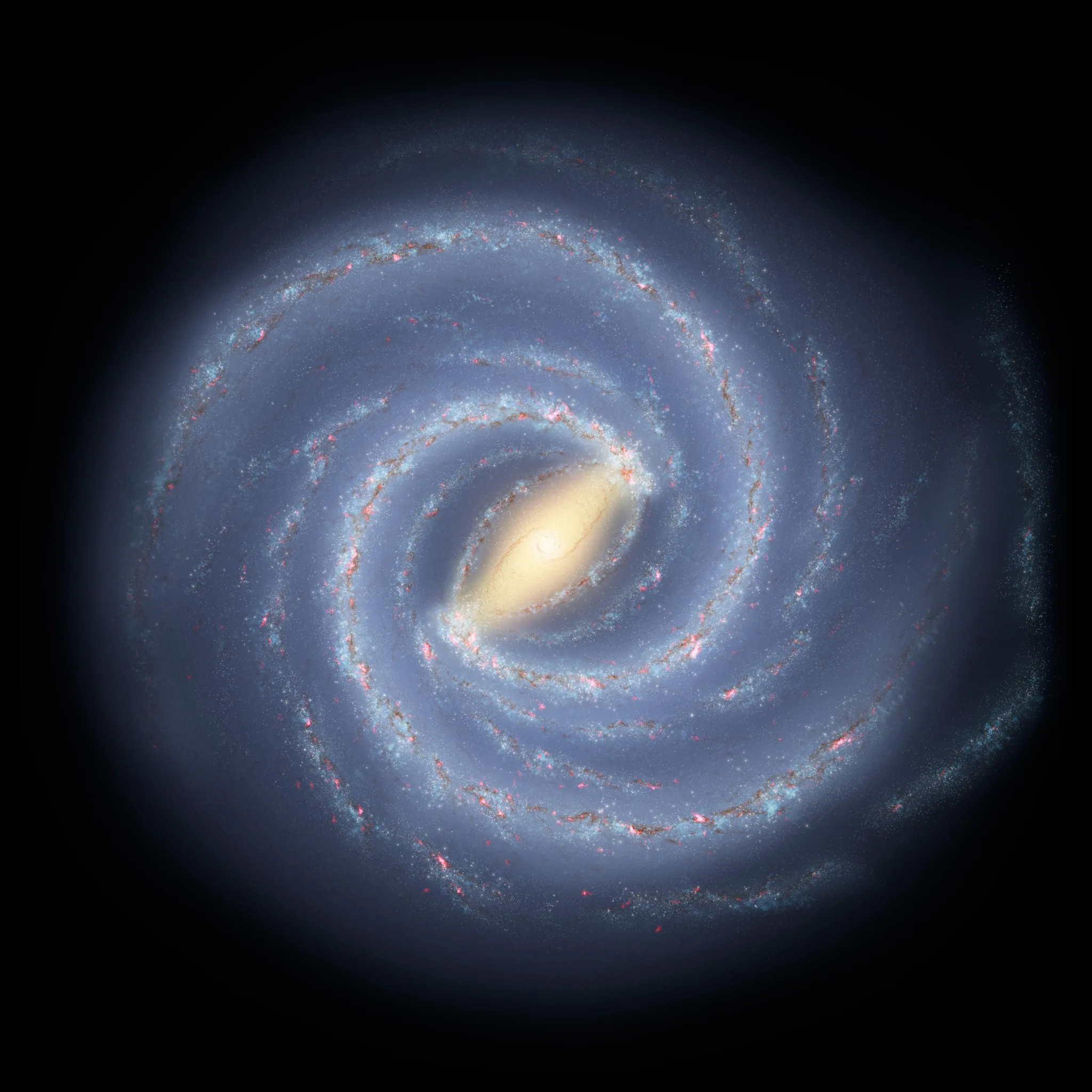
- This view is
- 4 m
- Light crosses it in
The same ten rungs on one axis:
Notice the gaps. From you to Earth is 7 zeros. From Earth to the Sun, 4 more. From the Sun to the nearest star, 5 more. Then the galaxy adds 4, and the rest of the universe adds 6. Every rung is big; the jump to the nearest star is the one that breaks people.
Rung 1–2: You, then Earth
You are 1.7 metres tall. Earth is 12,742 km across: about 7.5 million of you lying head to toe.
Fly around the equator at airliner speed and it takes two days. Light does it in 0.13 seconds. Earth already feels large, and it’s the smallest thing on this list that isn’t you.
Rung 3: The Moon
384,400 km away, on average. Every other planet in the Solar System, lined up side by side, just fits in the gap between Earth and the Moon.
Apollo took three days. Light takes 1.3 seconds: when you look at the Moon, you see it as it was a heartbeat ago.
Rung 4: The Sun
150 million km, a distance astronomers call one astronomical unit (AU) because writing the zeros gets old. Light takes 8 minutes 20 seconds. If the Sun switched off, you’d keep tanning for eight more minutes.
The Sun itself is 1.39 million km wide, 109 Earths across and a million Earths by volume. It is 99.86% of all the mass in the Solar System. Everything else, all eight planets included, is rounding error.
Rung 5: The edge of the Solar System
Neptune orbits at 30 AU (4 light-hours). Voyager 1, launched in 1977 and still moving at 17 km/s, is now about 170 AU out: almost one light-day. It’s the most distant thing humans have ever built, and light from it takes a day to reach us.
Voyager took nearly fifty years to get there. Hold that number for the next rung.
Rung 6: The nearest star
Proxima Centauri is 4.24 light-years away, or 40 trillion km. At Voyager’s speed, the trip takes about 75,000 years. Fifty years to leave the Solar System; seventy-five thousand to reach the next one.
This is the rung that matters. Everything you have ever heard called “space travel” happens inside the first five rungs. The stars are a different sport.
Rung 7: The Milky Way
Our galaxy is a disc roughly 100,000 light-years across holding somewhere between 100 and 400 billion stars. The Sun sits about 26,000 light-years from the centre and takes 230 million years to orbit it once. The last time we were on this side of the galaxy, dinosaurs were just getting started.
Every star you can see with your naked eye is inside the Milky Way, and almost all of them are within a few thousand light-years, a small patch of one arm.
Rung 8: Andromeda and the Local Group
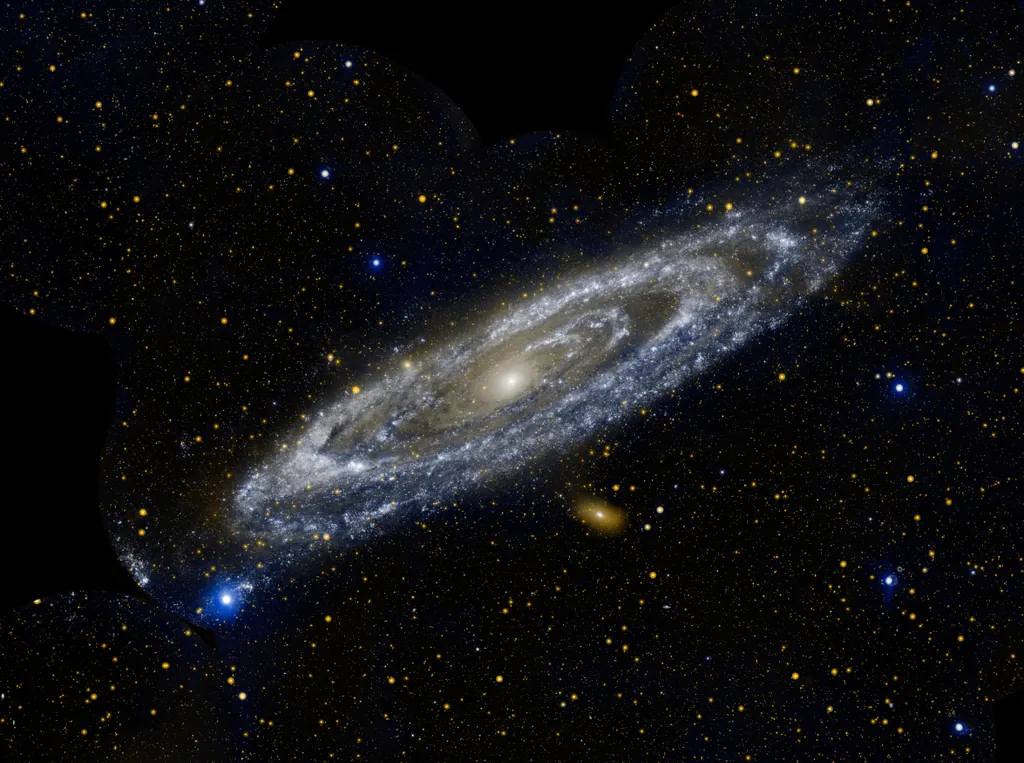
The next big galaxy over, Andromeda, is 2.5 million light-years away and heading toward us at 110 km/s. The two will merge in about 4.5 billion years. It’s the most distant thing you can see without a telescope: a faint smudge, and the light in that smudge left before humans existed.
Andromeda, the Milky Way and about eighty smaller galaxies form the Local Group, roughly 10 million light-years across.
Rung 9: Laniakea
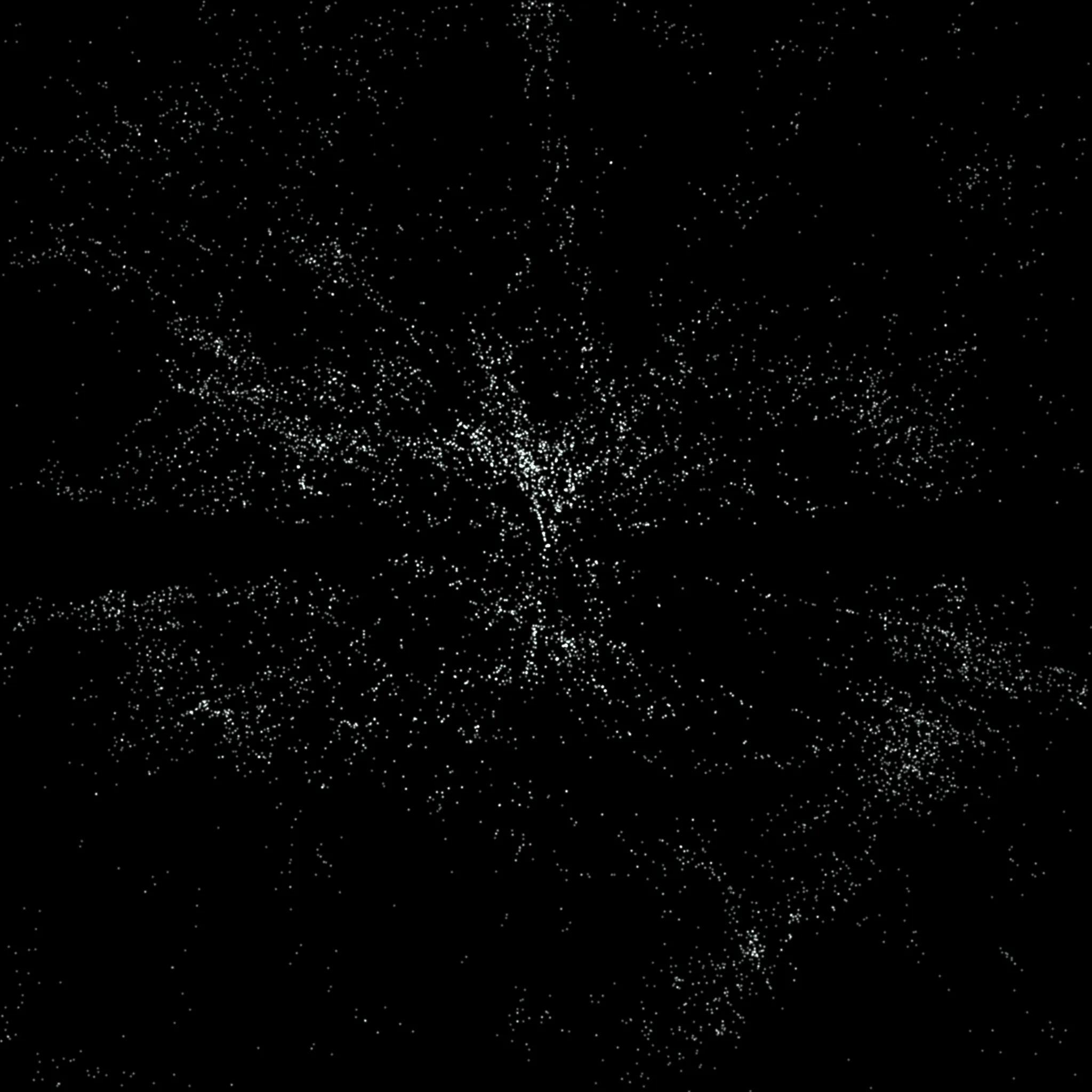
Zoom out and galaxies clump into filaments and walls around vast empty voids, like soap foam. Our Local Group is a speck in the Laniakea Supercluster: about 520 million light-years across, holding around 100,000 galaxies, all drifting toward a gravitational centre we can’t see.
Rung 10: The observable universe
The furthest we can see in any direction is about 46.5 billion light-years, so the observable universe is a sphere 93 billion light-years across. Estimates put the number of galaxies inside it somewhere between a couple of hundred billion and two trillion. Each one is a Milky Way.
“Observable” is doing real work in that sentence. It’s not the edge of the universe. It’s the edge of what light has had time to reach us from. Beyond it, the universe almost certainly continues; we simply can’t see it, and may never.
Shrink it: the Sun as a marble
Numbers with twelve zeros don’t land. So shrink everything until the Sun is a 1 cm marble.
| Thing | On this scale |
|---|---|
| Sun | 1 cm marble |
| Earth | A speck 0.1 mm wide, 1 m from the marble |
| Neptune | 30 m away |
| Voyager 1 | About 180 m away, after 49 years of flying |
| Nearest star | Another marble, 290 km away |
| Milky Way | 7 million km across — 18 times the real Earth–Moon distance |
A marble on a table, a dust speck a metre away, and the next marble in a city three hundred kilometres down the road. That’s a star system and its neighbour. Space is mostly named after its main ingredient.
The twist: older than 13.8 billion years? No. Bigger? Yes.
The universe is 13.8 billion years old. So how can we see 46 billion light-years in every direction?
Because space itself has been stretching the whole time. The oldest light we detect, the cosmic microwave background, left its source 13.8 billion years ago when that source was about 42 million light-years from here. While the light was in transit, the space between us and the source kept expanding. Today, that source is 46 billion light-years away.
Nothing travelled faster than light. The road got longer while the light was on it.
What to keep
- Compare neighbours only. You → Earth → Moon → Sun makes sense. You → galaxy doesn’t.
- Use light-time. Seconds to the Moon, minutes to the Sun, years to stars, millennia across the galaxy, aeons across everything.
- The nearest star is the wall. Fifty years to leave home; seventy-five thousand to arrive anywhere.
- Observable ≠ all. We see a 93-billion-light-year sphere. The rest is out there, unseen.
Image and data credits
- You — Bruce McCandless II on the first untethered spacewalk, STS-41B, 7 February 1984. NASA (1984-02-11).
- Earth — Blue Marble 2012 (Suomi NPP / VIIRS composite). NASA/NOAA/GSFC/Suomi NPP/VIIRS/Norman Kuring (2012-01-30).
- The Moon — Earth and the Moon from OSIRIS-REx MapCam, 2 October 2017, from about 5 million km. NASA/Goddard/University of Arizona (2017-10-02).
- The Sun — The Sun in extreme ultraviolet (AIA 171 Å), latest SDO image at harvest time. NASA/SDO/AIA (2026-09-21).
- The Milky Way — The Milky Way, artist's concept (top-down). NASA/JPL-Caltech/R. Hurt (SSC/Caltech) (2008-06-03).
- Andromeda — Andromeda (M31) in ultraviolet, GALEX. NASA/JPL-Caltech (2012-05-16).
- Laniakea — 2MASS Redshift Survey, supergalactic plane, 600 Mly frame, ±60 Mly slab. 2MASS Redshift Survey, Huchra et al. 2012 (ApJS 199, 26); 2MASS is a joint project of UMass and IPAC/Caltech, funded by NASA and the NSF (2012).
- The observable universe — WMAP 9-year Internal Linear Combination map, Mollweide projection, Galactic coordinates. NASA/WMAP Science Team (2012-12-20).
- Distances and sizes: NASA NSSDC planetary fact sheets; Voyager 1 range from JPL Horizons on the date shown; Proxima Centauri from the NASA Exoplanet Archive; nearest-star positions from RECONS; Laniakea from Tully et al. 2014; observable-universe radius from the WMAP science team. Every number is listed with its source in the component manifest.